
What Is Force Free Dog Training?
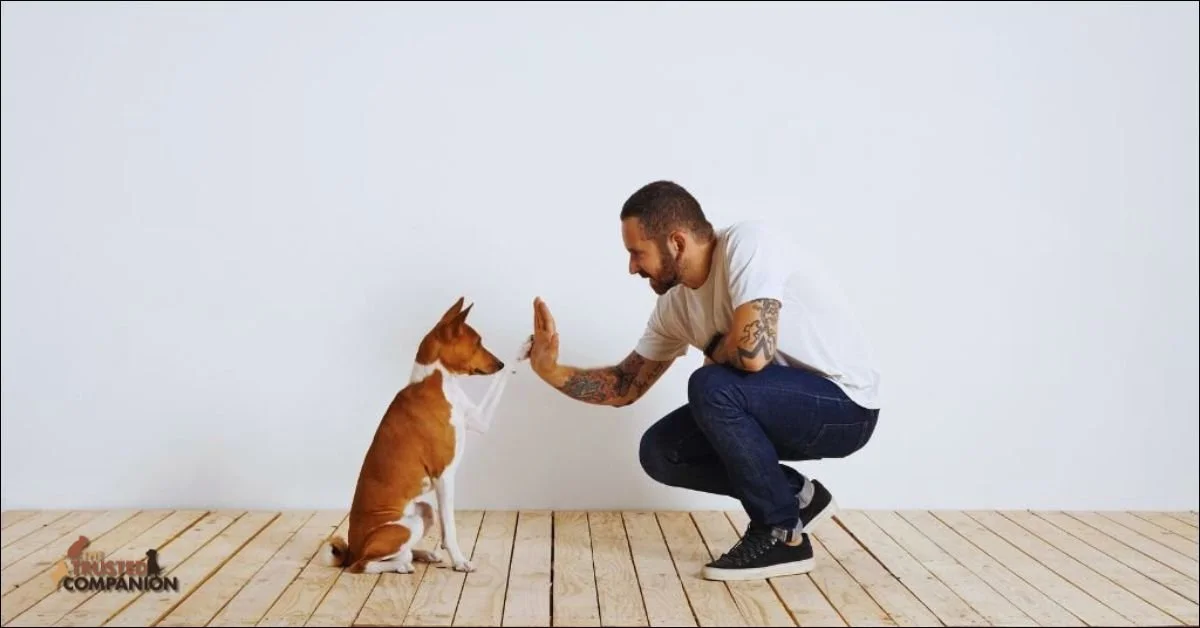
Training is one of the most important ways you can support your dog’s well-being. It helps your dog understand what you are asking, builds daily routines, improves safety, and makes life together more enjoyable. Whether you are teaching a puppy to sit, helping an adult dog walk calmly on a leash, or addressing reactivity, the training approach you choose can shape how your dog feels during the learning process.
Many caring pet owners eventually ask the same question: What is force-free dog training?
Force-free dog training is a reward-based approach that teaches dogs without using pain, fear, intimidation, or physical force. Rather than trying to stop unwanted behavior with harsh corrections, this method focuses on understanding why the behavior occurs and teaching the dog a safer, more rewarding alternative.
For dog owners who feel frustrated, embarrassed, worried, or overwhelmed by their dog’s behavior, this approach can offer something especially valuable: hope. Your dog is not trying to make your life difficult. They may be confused, scared, overstimulated, excited, or lacking the skills to handle a situation differently. With patience, consistency, and the right support, dogs of all ages can learn.
At The Trusted Companion, we believe training should help both ends of the leash feel more confident. You do not need to be perfect, and your dog does not need to be “fixed” to deserve kindness, understanding, and effective guidance.
What Is Force-Free Dog Training?
Force-free dog training is a method of teaching that avoids physical punishment, fear, pain, threats, or intimidation. It focuses on rewarding behaviors you want to see more often while managing situations that may cause your dog to struggle.
In simple terms, force-free training teaches your dog what to do instead of only reacting when they do something you do not want.
For example, imagine that your dog jumps on visitors when they arrive. A force-free approach would not involve yelling, kneeing the dog, jerking their collar, or using a punishment-based tool. Instead, you may teach your dog that keeping four paws on the floor, going to a mat, or sitting calmly earns treats, attention, or a chance to greet the guest.
The goal is not simply to suppress a behavior. The goal is to build a clear communication system between you and your dog.
Force-free dog training often uses:
Food rewards, such as treats your dog enjoys
Toys, play, and games
Praise and affection, when your dog finds them rewarding
Environmental rewards, such as getting to sniff, go outside, or greet a friendly person
Clear cues and consistent routines
Management strategies that prevent your dog from rehearsing unwanted behaviors
Gradual exposure to challenging situations at a pace your dog can handle
This method is based on the idea that dogs repeat behaviors that lead to good outcomes. When sitting politely earns attention, your dog is more likely to sit politely again. When checking in with you on a walk earns a treat or the chance to keep moving, your dog learns that paying attention to you is worthwhile.
Force-free training is not about letting dogs do anything they want. It includes boundaries, structure, and guidance. The difference is that those boundaries are taught without making your dog afraid of you or of making mistakes.
What Does Force Free Dog Training Mean for Your Dog?
For your dog, force-free training means learning in a way that feels safer, clearer, and more predictable. Dogs learn best when they understand what behavior is being rewarded and when they are not overwhelmed by fear or discomfort.
A dog who is scared, anxious, or in pain may appear to obey in the moment, but that does not always mean they understand what is being taught. They may simply be trying to avoid something unpleasant. Force-free training aims to create genuine learning by making desired behaviors rewarding and easy to understand.
This matters because behavior is often a form of communication.
A dog who barks at strangers may be worried or feel unsafe. A dog who lunges at other dogs may be fearful, frustrated, or overexcited. A dog who chews furniture may be bored, anxious, teething, or not getting enough appropriate outlets. A dog who growls may be asking for space.
Instead of punishing the warning signs, force-free training looks beneath the behavior. It asks questions such as:
What is my dog trying to communicate?
What happens right before this behavior occurs?
Is my dog scared, overstimulated, frustrated, or confused?
How can I make this situation easier?
What alternative behavior can I teach?
What reward will motivate my dog to make a different choice?
This compassionate approach does not mean ignoring serious behavior concerns. It means addressing them thoughtfully. If your dog is fearful, reactive, anxious, or aggressive, the path forward often starts by improving safety, reducing stress, and building new positive associations.
Your dog does not need shame or punishment. They need clear support, practical skills, and an owner who understands that progress takes time.
Why Are Dog Owners Choosing Force-Free Training?
More dog owners are choosing force-free dog training because they want a training approach that is effective while also protecting their relationship with their dog.
Living with a dog who pulls, barks, growls, panics, jumps, or reacts can be exhausting. You may feel like everyone is watching you on walks. You may avoid having people over. You may wonder whether you caused the problem or whether your dog can ever improve.
Those feelings are common, but they do not mean you have failed.
Force-free training offers many owners a practical way to move forward without relying on fear-based methods. Instead of trying to dominate or control a dog, this approach helps owners become calm, reliable guides.
Key benefits of force-free dog training include:
It builds trust between dogs and their people.
It teaches dogs what behaviors are wanted.
It can reduce stress during the learning process.
It supports long-term behavior change through repetition and rewards.
It can be adapted for puppies, adult dogs, senior dogs, and rescue dogs.
It encourages owners to understand their dog’s body language and emotions.
It strengthens communication in everyday situations.
It helps create a more relaxed home environment.
Training should not make you feel like you are in a battle with your dog. It should help you become a team.
When dogs feel understood, and owners feel supported, even difficult behavior challenges can feel more manageable. Progress may not always be perfectly straight, but every small improvement counts. A calmer walk, one successful greeting, a few seconds of focus, or a dog choosing to look at you rather than react can be meaningful steps forward.
The Core Principles of Force Free Dog Training
Force-free training is commonly connected to learning theory, including operant conditioning. This simply refers to how behavior can change based on what happens afterward.
There are four commonly discussed categories, sometimes called the four quadrants of operant conditioning. Understanding them can help clarify why force-free trainers emphasize rewards and careful management.
1. Positive Reinforcement
Positive reinforcement means adding something your dog likes after a desired behavior. This makes the behavior more likely to happen again.
For example, if you ask your dog to sit and then give them a small treat after they sit, you are using positive reinforcement. Your dog learns that sitting when asked has a positive result.
Rewards can include:
Treats
A favorite toy
Praise
Petting, if your dog enjoys it
A game of tug
Tossing a ball
Being allowed to sniff a tree
Access to the yard
Greeting a person or dog, when appropriate
The best reward depends on your dog and the situation. A piece of kibble may be enough at home, while a high-value treat may be more helpful outdoors, where distractions are greater.
2. Negative Reinforcement
Negative reinforcement means removing something unpleasant when a behavior happens. The word “negative” means something is taken away, while “reinforcement” means the behavior is likely to increase.
For example, pressure on a leash that stops when a dog moves in a certain direction can be considered negative reinforcement.
Force-free trainers generally aim to rely less on this method because it often involves discomfort or pressure at the beginning of the learning process. Instead, they prefer teaching desired behavior proactively through positive reinforcement whenever possible.
3. Positive Punishment
Positive punishment means adding an unpleasant stimulus after a behavior to reduce that behavior.
Examples can include yelling, leash jerks, startling noises, physical corrections, spray bottles, prong collars, and electronic collars. While these methods may interrupt behavior, they can also create stress, fear, confusion, or negative associations.
For example, if a dog is punished for barking at another dog, they may begin to associate the presence of other dogs with discomfort. This can increase their anxiety instead of solving the underlying issue.
Force-free dog training does not use positive punishment as a training strategy.
4. Negative Punishment
Negative punishment means taking away something the dog wants after an unwanted behavior, making that behavior less likely to occur again.
For example, if a dog jumps up during play and the play pauses for a few seconds, the dog may learn that jumping makes the fun stop. If the dog keeps four paws on the floor and play resumes, they learn what behavior works better.
Used thoughtfully, negative punishment can be part of a force-free training plan. It should be brief, clear, and paired with teaching your dog what to do instead.
The most important part is not simply removing access to something your dog wants. It is giving your dog a realistic alternative behavior that can earn back that reward.
Force-Free Dog Training Techniques You Can Use
Force-free training includes several techniques that help dogs learn step by step. These methods can make training easier, especially when you are teaching new skills or helping a dog feel more confident.
1. Clicker Training
Clicker training uses a small device that makes a distinct clicking sound. The click marks the exact moment your dog does something right. It is then followed by a reward, usually a treat.
For example, if you are teaching “sit,” you click the moment your dog’s rear touches the floor, then give them a treat. With repetition, your dog learns that the click means, “Yes, that is the behavior I wanted.”
A clicker can be useful because it is precise and consistent. You can also use a short verbal marker such as “yes” or “good” if you prefer not to use a clicker.
2. Shaping
Shaping means rewarding small steps toward a bigger behavior. Rather than expecting your dog to understand a full task immediately, you reward progress in manageable pieces.
For example, to teach your dog to go into a crate willingly, you might reward them for:
Looking at the crate
Walking toward the crate
Putting one paw inside
Putting all four paws inside
Remaining inside calmly for a few seconds
Shaping is especially useful for complex behaviors, fearful dogs, and skills that require confidence. It gives your dog more opportunities to succeed.
3. Luring
Luring uses a treat, toy, or other reward to guide your dog into a position or movement. For example, you can hold a treat slightly above your dog’s nose and move it backward to encourage a sit.
Luring can be helpful when first teaching behaviors such as sit, down, spin, hand target, or heel position. However, the lure should gradually be faded so your dog learns the verbal cue or hand signal instead of depending on seeing food every time.
4. Capturing
Capturing means noticing and rewarding a behavior your dog offers naturally. If your dog lies quietly on their bed, you can calmly mark and reward that behavior. Over time, your dog may choose to settle on their bed more often because it has become rewarding.
This is one of the easiest force-free training techniques because you are working with behavior your dog is already doing.
You can capture behaviors such as:
Calmly lying down
Looking at you
Choosing not to bark at a noise
Sitting politely
Walking beside you
Going to a mat
Relaxing in a crate
Waiting at a door
5. Management
Management is an important part of force-free training. It means arranging the environment so that your dog is less likely to engage in unwanted behavior while they are still learning.
For example, if your dog chews shoes, put shoes away and provide appropriate chew toys. If your dog rushes the front door, use a baby gate or keep them on a leash when visitors arrive. If your dog reacts to dogs on walks, choose quieter routes and create more distance.
Management is not cheating. It is a thoughtful way to keep your dog safe and set them up for success.
How to Start Force-Free Dog Training at Home
You do not need complicated equipment to begin. Start with simple goals, rewards your dog enjoys, and short practice sessions.
Here is a helpful starting process:
Choose one behavior to teach. Start with something simple, such as sit, touch, come when called, or go to a mat.
Find a reward your dog loves. Small, soft treats are often useful because they can be eaten quickly. You can also use toys, praise, or access to activities your dog enjoys.
Train in a low-distraction space. Begin in your home or yard before expecting your dog to focus in a busy park or around other dogs.
Mark the correct behavior quickly. Use a clicker or a verbal marker such as “yes” at the exact moment your dog performs the behavior.
Reward immediately. Timing matters. Give the reward soon after you mark the behavior so your dog connects it to the right action.
Keep sessions short. A few successful minutes can be more productive than a long session that leaves your dog tired or frustrated.
Increase difficulty gradually. Once your dog understands the behavior at home, practice in slightly more challenging settings.
End on a positive note. Stop while your dog is still engaged and successful.
For example, if you are teaching your dog to look at you during walks, begin indoors. Say your dog’s name once. When they look at you, mark the behavior and give a treat. After enough practice, repeat the exercise in the yard, then on a quiet street, and later in more distracting environments.
Small steps create reliable results.
Can Force Free Training Help With Reactivity or Aggression?
Force-free dog training can be especially valuable for dogs who are reactive, fearful, anxious, or aggressive. These behaviors can feel frightening and isolating for owners, but they are not a reason to give up on your dog.
Reactivity may look like barking, lunging, growling, snapping, or pulling when your dog sees another dog, person, bike, vehicle, or unfamiliar object. Aggression can involve behaviors intended to increase distance from something the dog finds threatening or uncomfortable.
A force-free approach often includes strategies such as desensitization and counterconditioning.
Desensitization means exposing your dog to a trigger at a level they can handle without becoming overwhelmed. For example, if your dog reacts to other dogs, you may begin training at a distance where your dog can see another dog but can still eat treats and respond to you.
Counterconditioning means helping your dog form a new emotional association. If seeing another dog consistently predicts something enjoyable, such as high-value treats, your dog may begin to feel less worried over time.
It is important to work at your dog’s pace. Forcing a fearful or reactive dog too close to a trigger can make the problem worse. Distance is often one of the most helpful tools you have.
For serious behavior concerns, especially if there is a risk of biting or injury, professional guidance is strongly recommended. A knowledgeable trainer can help you create a safer plan that supports your dog without judgment.
When Should You Work With a Professional Dog Trainer?
You do not have to handle every challenge alone. Working with a professional dog trainer can provide practical support, clear steps, and a training plan tailored to your dog’s needs.
Consider reaching out for help if your dog:
Growls, snaps, bites, or shows aggressive behavior
Barks and lunges at people or dogs
Is extremely fearful or anxious
Panics when left alone
Guards food, toys, furniture, or spaces
Has trouble adjusting after adoption or a major life change
Struggles with leash walking, recall, or basic manners despite consistent practice
Makes you feel nervous, discouraged, or unsure of what to do next
The right trainer should help you feel supported rather than blamed. Look for someone who can explain their methods clearly, listen to your concerns, and create realistic goals for your household.
A good training plan is not about making your dog look perfectly obedient. It is about improving communication, building confidence, keeping everyone safe, and helping you enjoy more peaceful moments together.
Conclusion
Now that you know what force-free dog training is, you can make informed decisions about how to guide your pet’s behavior in a kind and respectful way.
This method focuses on building a partnership through rewards and trust, not control or punishment. Whether you are just starting out or trying to fix a specific behavior, force-free training offers a smart and compassionate path forward.
With consistency, patience, and positive reinforcement, you can teach your dog new skills, encourage better manners, and build a lasting relationship filled with respect and understanding.
Let your dog learn through kindness. Start your journey with force-free dog training today.
FAQs
What does force-free dog training mean?
Force-free dog training is a method that avoids using pain, fear, or intimidation to change a dog’s behavior. It focuses on positive reinforcement, using rewards like treats, toys, or praise to encourage good behavior.
Is force-free training effective for all dog breeds?
Yes, force-free methods can be effective for dogs of all breeds and ages, including those with behavioral challenges. The key is consistency, patience, and understanding each dog’s individual learning pace and motivation.
How is force-free training different from traditional training methods?
Traditional training often relies on corrections or dominance-based techniques, while force-free training avoids punishment altogether. Instead, it builds trust and strengthens the human-dog bond through kindness and clear communication.
Can force-free training stop aggressive or reactive behaviors?
Force-free trainers address the root cause of aggressive or reactive behaviors through desensitization and counter-conditioning. These methods help dogs feel safer and more confident without fear-based tactics.
Who can benefit from using force-free dog training?
Both new and experienced dog owners can benefit from force-free training because it promotes long-term results and a more harmonious relationship. It’s especially helpful for families, as it encourages gentle and respectful interactions with pets.